- The Sasak
- Weaving and crafts
- Wetu Telu and Lombok’s religions
- Festivals and traditions
- Visiting mosques and temples
- Everyday etiquette
- Ramadan for visitors
The Sasak
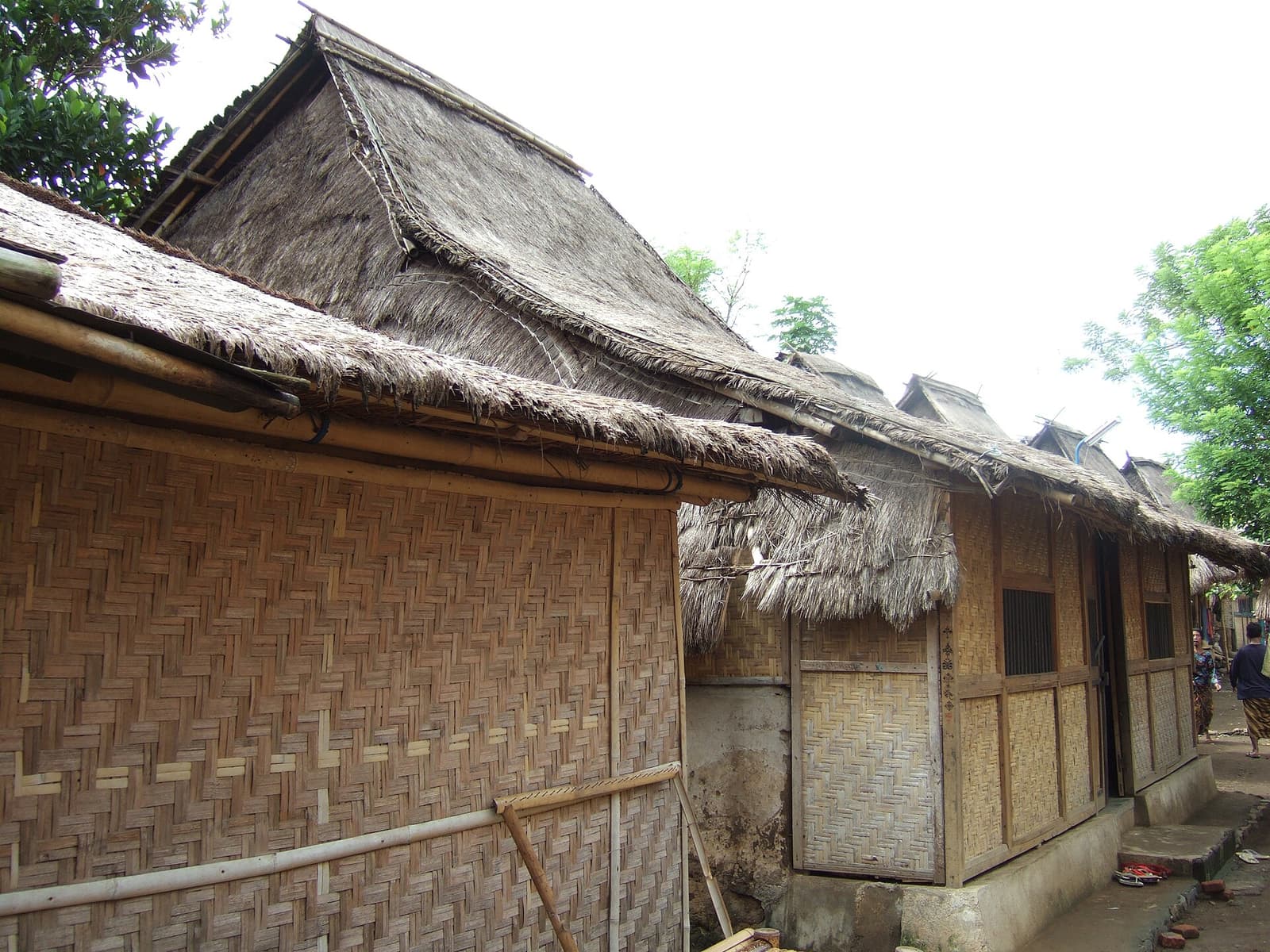
The Sasak make up the great majority of Lombok’s population. Their language, customs and architecture are distinct from those of Bali and Java. Most are Muslim, and Lombok is known as the “Island of a Thousand Mosques”. Traditional villages such as Sade and Ende preserve thatched houses and rice barns that have become symbols of the island.
Weaving and crafts
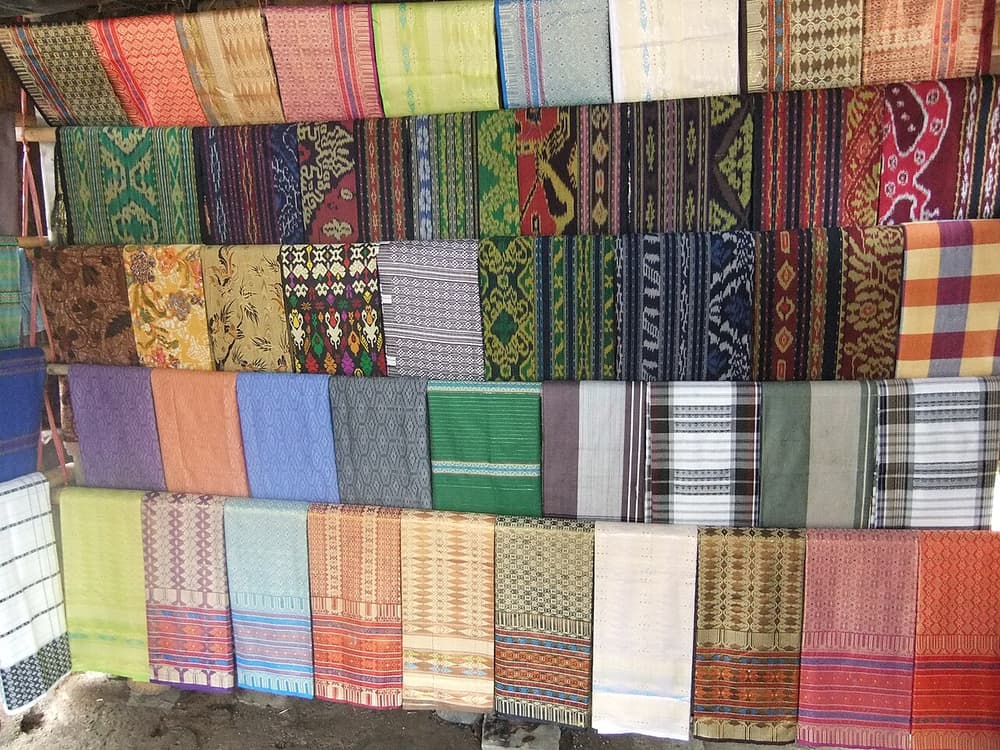
Handweaving is an important Sasak art; traditionally, girls learned to weave before marriage. Villages such as Sukarara and Pringgasela produce songket and ikat cloth on backstrap looms. Banyumulek and Penujak are known for pottery; Loyok for bamboo and grass crafts. Buying directly from the makers supports the villages.
Wetu Telu and Lombok’s religions
In parts of northern Lombok, around Bayan, a tradition called Wetu Telu blends Islam with older Sasak beliefs and ancestor veneration. Most Sasak follow mainstream Islam (sometimes called Waktu Lima). Lombok’s Balinese Hindu community, concentrated in and around Mataram, maintains temples such as Pura Meru and Pura Lingsar — where, uniquely, Hindus and Muslims share rituals such as Perang Topat.
Festivals and traditions
- Bau Nyale — the sea-worm festival on the south coast, linked to the legend of Princess Mandalika, who threw herself into the sea rather than choose between suitors.
- Perang Topat — the rice-cake “war” at Pura Lingsar.
- Presean — stick-fighting duels at festivals, accompanied by music.
- Gendang beleq — big-drum ensembles that accompany ceremonies and weddings.
- Nyongkolan — wedding processions along the road, with music; be patient if traffic stops.
Visiting mosques and temples
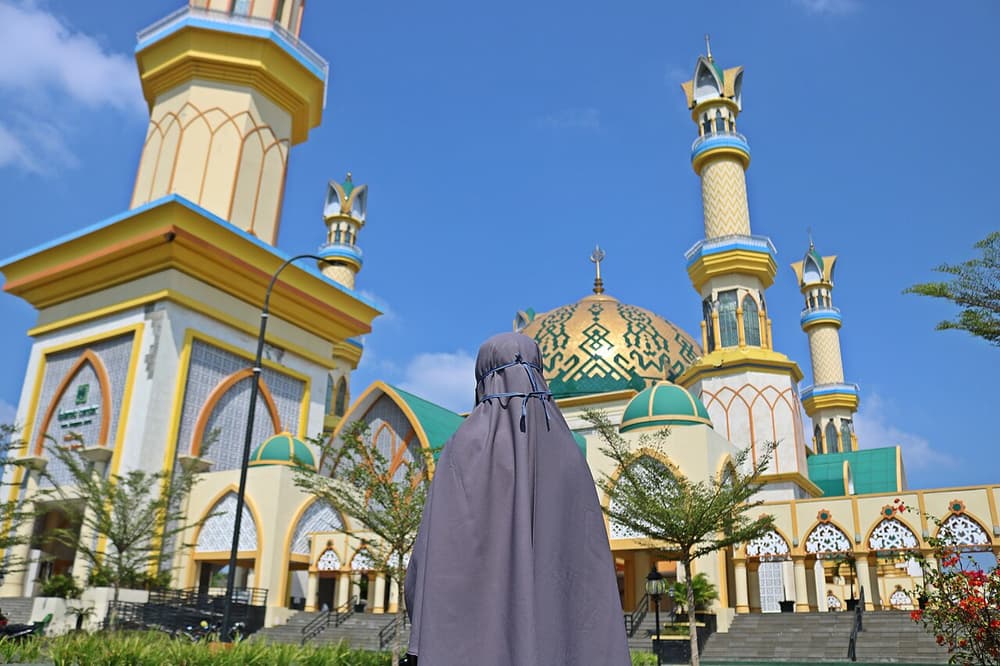
At mosques, dress conservatively (long sleeves and trousers or skirts; women cover their hair), remove shoes and avoid prayer times. The Islamic Center in Mataram welcomes visitors outside prayers. At Hindu temples, wear a sarong and sash (usually provided), and follow posted rules.
Everyday etiquette
- Cover shoulders and knees away from the beach and pool.
- Use your right hand to give, receive and eat.
- Remove shoes when entering homes.
- Ask before photographing people.
- Avoid public displays of affection.
- Keep calm and polite in disagreements; raising your voice causes embarrassment.
- Learn a few words: terima kasih (thank you), permisi (excuse me), tidak, terima kasih (no, thank you).
Ramadan for visitors
During Ramadan, eat, drink and smoke discreetly in public during daylight, dress modestly and expect some local businesses to keep shorter hours. The evening breaking of the fast (buka puasa) is a lively, social time. Around Eid, many people travel and roads, ferries and flights are busy.