- The mountain
- Routes and trek options
- What to expect on the crater rim
- Season, closures and rules
- Segara Anak and the hot springs
- Choosing an operator
- Packing list
- Safety
The mountain
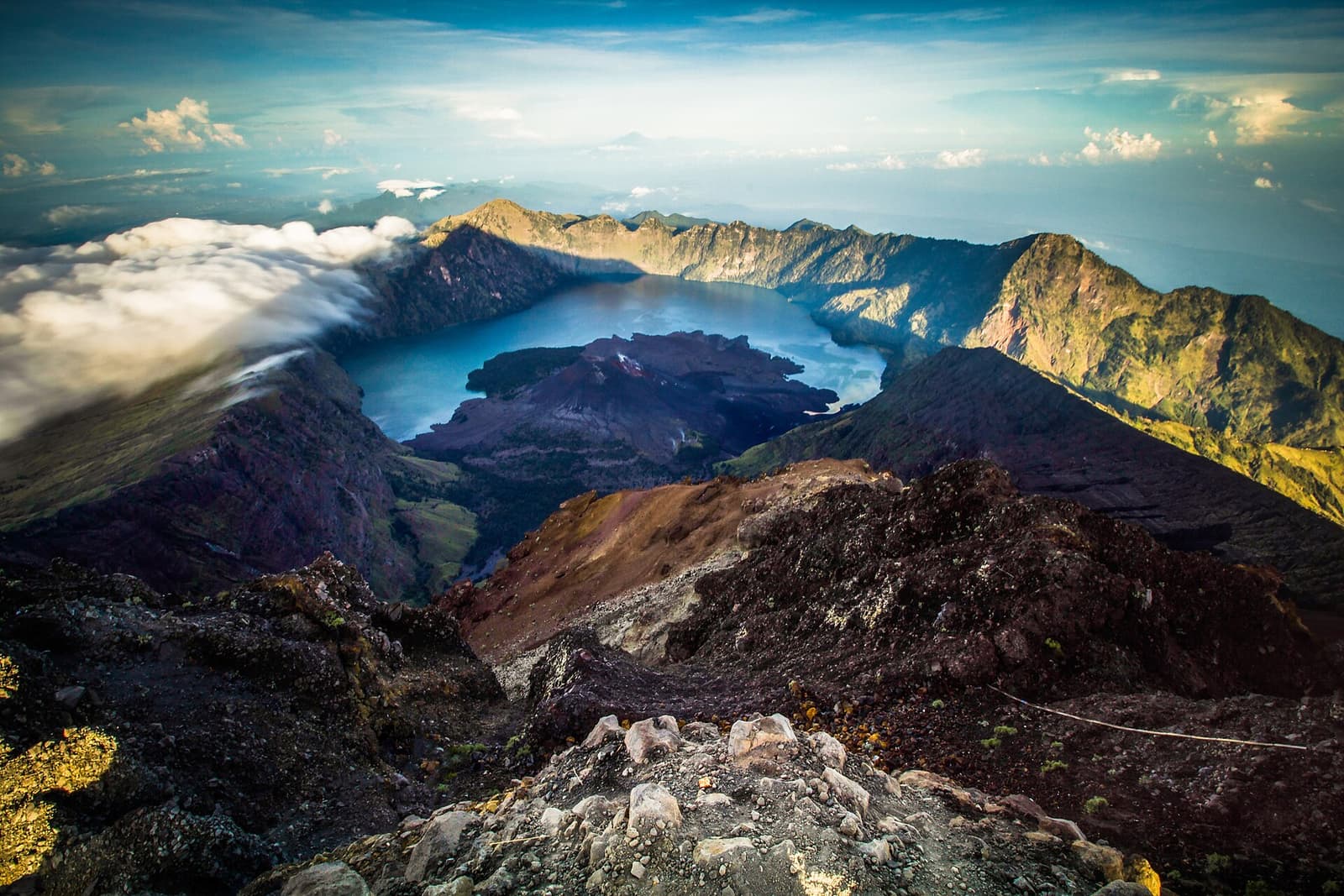
At 3,726 metres, Gunung Rinjani is Indonesia’s second-highest volcano. Its summit caldera holds the crater lake Segara Anak at about 2,000 metres, with the active cone of Gunung Barujari rising from it. The mountain is protected as Gunung Rinjani National Park and is part of a UNESCO Global Geopark. It is sacred to Sasak and Balinese Hindu communities.
Routes and trek options
The two classic trailheads are Senaru on the north side (forest, then grassland, to the northern rim) and Sembalun on the east (open savanna to the eastern rim and the summit). Other routes, such as Torean, Timbanuh and Aik Berik, open and close depending on park decisions and conditions.
| Trek | Typical length | Highlights | Difficulty |
|---|---|---|---|
| Senaru crater rim | 1 long day or 2 days / 1 night | Rim views over the lake and Barujari | Hard |
| Sembalun crater rim | 2 days / 1 night | Savanna, eastern rim, sunset | Hard |
| Summit via Sembalun | 2 days / 1 night | Sunrise from 3,726 m | Very hard |
| Summit, lake & hot springs | 3 days / 2 nights | Summit, Segara Anak, springs, both rims | Very hard |
| Full traverse | 4 days / 3 nights | All of the above at a gentler pace | Hard, more manageable |
What to expect on the crater rim
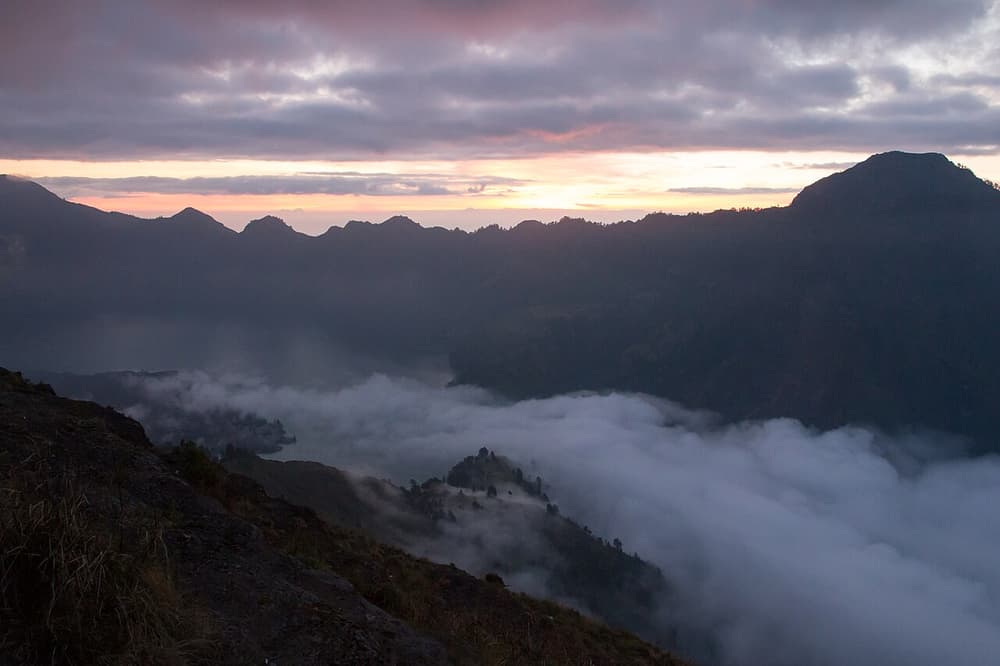
Day one is a long climb — six to eight hours — through heat, dust and, on the Senaru side, steep forest roots. You reach the rim camp in the afternoon; porters set up tents and cook dinner as the sun sets over the caldera. Nights are cold and windy. On summit treks, you leave camp around 2–3 am for a three- to four-hour climb up loose volcanic gravel to see the sunrise from the top.
Season, closures and rules
- Season: trails normally open from around April and close for the wettest months, usually about January to March. Exact dates are set by the park each year.
- Closures: the park can close trails at short notice for weather, volcanic activity, fires or after accidents.
- Guides: trekkers must go with a licensed guide or registered operator.
- Registration: entry is booked through the park’s registration system — in recent seasons an online app — and operators normally handle this.
- Rubbish: everything carried up must be carried down; the park has tightened rules on waste.
Segara Anak and the hot springs
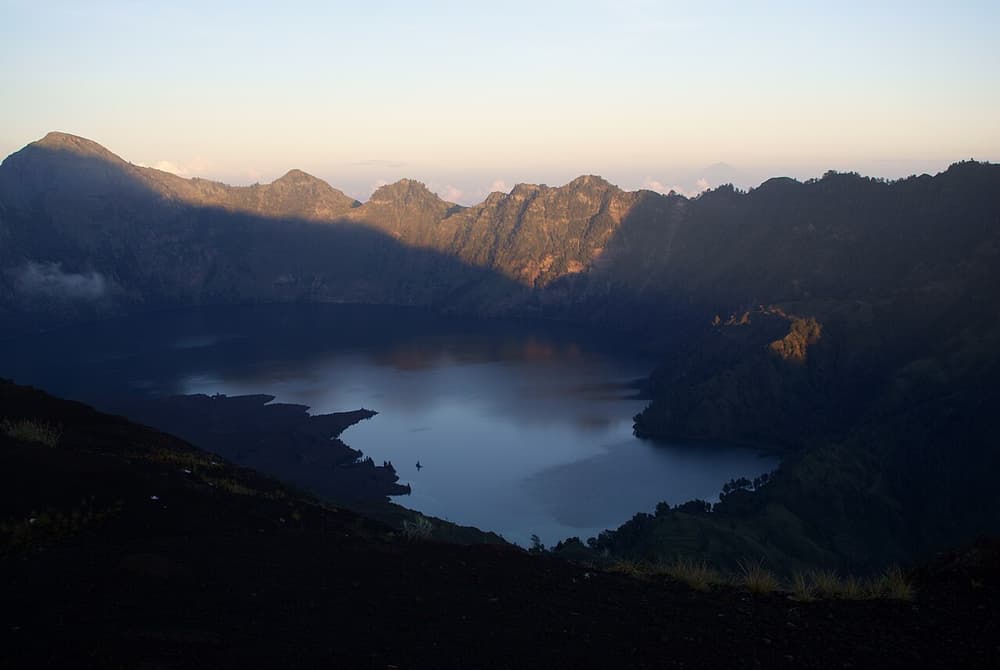
On three-day treks, the route descends steeply from a rim into the caldera to camp beside the lake. Hot springs a short walk away are a welcome reward — and a place of pilgrimage for local people. The climb back out is steep; some routes exit via the opposite rim, giving two different views.
Choosing an operator
- Read recent reviews about food, equipment and guides — not just the views.
- Ask how porters are paid and equipped, and what happens to rubbish.
- Check what is included: park fees, transfers, the night before, sleeping bags, water.
- Ask about group size and the turnaround policy if you are slow or the weather turns.
- Be wary of very cheap offers.
See the real, reviewed treks on our Rinjani tours page.
Packing list
- Trail shoes or boots with good grip; gaiters help on the summit scree
- Warm jacket, fleece, hat and gloves; rain jacket
- Head torch with spare batteries
- Sun hat, sunglasses, sunscreen
- Water bottles (operators usually provide water), electrolytes, snacks
- Trekking poles (recommended for the descent)
- Small first-aid kit, blister plasters, any medicines
Safety
Serious and sometimes fatal accidents have occurred on Rinjani, especially on the exposed summit ridge and steep descents. Turn back if conditions are bad or you are exhausted; listen to your guide. Make sure your travel insurance covers trekking to at least 3,800 metres and includes rescue.